5G vs 6G: Powerful Future Of Internet Speed
5G vs 6G: Discover the exciting future of internet speed, key differences, benefits, and what’s next in wireless technology.
5G vs 6G compares today’s fast wireless networks with the next generation of ultra-speed connectivity. While 5G is already transforming industries, 6G promises even faster speeds, near-zero latency, and smarter networks powered by AI.
5G Vs 6G: What’s Coming Next In Internet Speed 🚀
Are we already at peak internet speed, or is something even faster about to change everything?
The short answer: we’re just getting started.
5G is still rolling out globally, but 6G is already in development. It aims to deliver speeds up to 100 times faster than 5G. That means instant downloads, immersive experiences, and new tech we can barely imagine today.
Let’s break it all down in simple terms 👇
What Is 5G Technology? 📶
5G stands for the fifth generation of wireless technology. It is designed to provide faster speeds, lower latency, and better connectivity than 4G.
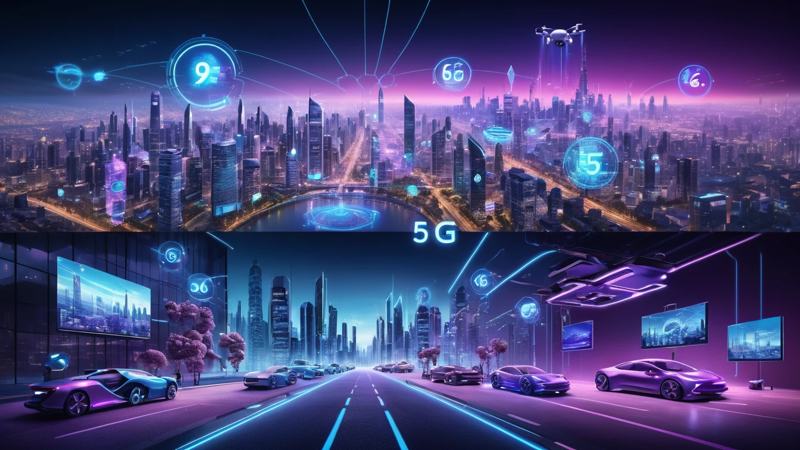
It powers modern innovations like smart cities, self-driving cars, and IoT devices. With 5G, you can stream high-quality videos without buffering and enjoy smoother online gaming.
The biggest strength of 5G is its ability to handle many devices at once. This makes it perfect for crowded areas like stadiums and cities.
What Is 6G Technology? 🌐
6G is the sixth generation of wireless networks. It is still in early development and is expected to launch around 2030.
Unlike 5G, 6G will rely heavily on artificial intelligence. It will enable faster communication and smarter systems that adapt automatically.
Think of 6G as a network that doesn’t just connect devices—it understands them.
It could bring holographic calls, advanced robotics, and real-time digital twins into everyday life.
Key Differences Between 5G And 6G ⚡
Here’s a simple comparison to understand how these technologies differ:
| Feature | 5G | 6G |
| Speed | Up to 10 Gbps | Up to 1 Tbps |
| Latency | ~1 millisecond | Less than 1 microsecond |
| AI Integration | Limited | Deep integration |
| Availability | Available now | Expected by 2030 |
| Use Cases | IoT, streaming | Holograms, smart AI systems |
In simple terms:
5G improves your current experience.
6G will completely transform it.
How Fast Is 5G Internet? 🚀
5G can reach speeds up to 10 gigabits per second. That’s about 100 times faster than 4G.
You can download a full HD movie in seconds. Streaming becomes smooth, even in crowded networks.
However, real-world speeds depend on location and infrastructure. Urban areas usually experience faster speeds than rural regions.
How Fast Will 6G Be? ⚡
6G is expected to deliver speeds up to 1 terabit per second. That’s insanely fast.
Imagine downloading an entire movie library in seconds. Even complex tasks like virtual reality will feel seamless.
This speed will unlock technologies we haven’t fully explored yet. It’s not just faster—it’s transformative.
Latency: Why It Matters So Much ⏱️
Latency is the delay between sending and receiving data. Lower latency means faster response times.
5G has reduced latency to around 1 millisecond. This is great for gaming and video calls.
6G aims to reduce latency even further. It could make real-time communication feel truly instant.
Real-World Applications Of 5G 🌍
5G is already making a big impact across industries.
Some key uses include:
- Smart homes and IoT devices
- Autonomous vehicles
- Remote healthcare and telemedicine
- Augmented reality apps
These applications are improving convenience and efficiency in daily life.
Future Applications Of 6G 🤖
6G will go beyond current limits. It will enable futuristic applications like:
- Holographic communication 📡
- Brain-computer interfaces
- Fully immersive virtual worlds
- Advanced robotics and automation
This is where science fiction starts becoming reality.
How 5G And 6G Impact Daily Life 🏡
5G already makes everyday tasks faster and smoother. Streaming, gaming, and video calls feel effortless.
With 6G, daily life could become highly interactive. Imagine attending meetings as holograms or exploring virtual worlds in real-time.
Your digital and physical worlds will blend seamlessly.
Infrastructure Requirements For 5G Vs 6G 🏗️
5G requires dense networks of small cells. These are placed close together to maintain strong signals.
6G will need even more advanced infrastructure. It may use satellites and higher frequency bands.
This means:
- More investment
- Advanced hardware
- New network designs
Spectrum And Frequency Differences 📡
5G uses sub-6 GHz and millimeter wave frequencies. These provide fast speeds but limited range.
6G will likely use terahertz frequencies. These allow extremely fast data transfer.
Here’s a quick comparison:
| Technology | Frequency Range | Coverage | Speed Potential |
| 5G | Sub-6 GHz, mmWave | Medium | High |
| 6G | Terahertz (THz) | Short | Extremely High |
Higher frequency means faster speed, but shorter distance.
Challenges Facing 6G Development ⚠️
6G is exciting, but it comes with challenges.
Some major hurdles include:
- High infrastructure costs
- Technical limitations
- Energy consumption concerns
- Security risks
Researchers are actively working to solve these issues before launch.
Security And Privacy In Next-Gen Networks 🔒
As networks evolve, security becomes more important.
5G already includes advanced encryption methods. But it still faces cyber threats.
6G will likely use AI-driven security systems. These systems can detect and prevent attacks instantly.
Better speed must come with better protection.
Environmental Impact Of 5G And 6G 🌱
5G is designed to be more energy-efficient than previous networks. However, increased usage can still impact energy consumption.
6G aims to improve sustainability further. It may use energy-efficient hardware and smarter systems.
The goal is to balance performance with environmental responsibility.
When Will 6G Be Available? 📅
6G is expected to launch around 2030. Research and testing are already underway.
Governments and tech companies are investing heavily in development.
So while it’s not here yet, it’s definitely on the horizon.
Should You Care About 6G Now? 🤔
Right now, 5G is still expanding. Most people are just starting to experience its benefits.
But understanding 6G helps you stay ahead of future trends. It shows where technology is heading.
Think of it as preparing for the next digital revolution.
5G Vs 6G: Quick Comparison Snapshot ⚡
| Aspect | 5G Today | 6G Future |
| Speed | Very fast | Ultra-fast |
| Latency | Low | Near zero |
| AI Usage | Basic | Advanced |
| Availability | Global rollout | Under development |
| Experience | Enhanced | Fully immersive |
Conclusion 🎯
5G is already transforming how we connect, work, and communicate. It delivers faster speeds and better reliability than ever before.
But 6G is where things truly get exciting. It promises unimaginable speed, near-instant communication, and smarter networks powered by AI.
The journey from 5G to 6G isn’t just about speed—it’s about redefining what’s possible.
The future of the internet is faster, smarter, and closer than you think.
FAQs ❓
What Is Difference Between 5G And 6G Speed?
5G offers speeds up to 10 Gbps, while 6G could reach 1 Tbps. That’s nearly 100 times faster. This makes 6G ideal for advanced technologies.
When Will 6G Internet Be Available Globally?
6G is expected to roll out around 2030. Research is still ongoing. It will take time for global adoption.
Is 6G Better Than 5G For Gaming?
Yes, 6G will provide lower latency and faster speeds. This means smoother gameplay. It will support advanced gaming experiences.
How Will 6G Change Everyday Life?
6G will enable immersive experiences like holograms. It will improve automation and smart systems. Daily tasks will become more interactive.
Do I Need A New Phone For 6G?
Yes, 6G will require new compatible devices. Current 5G phones won’t support it. New hardware will be needed.